
Before Jim Clark and John Surtees became household names, both British racing drivers cut their teeth in Formula Junior.
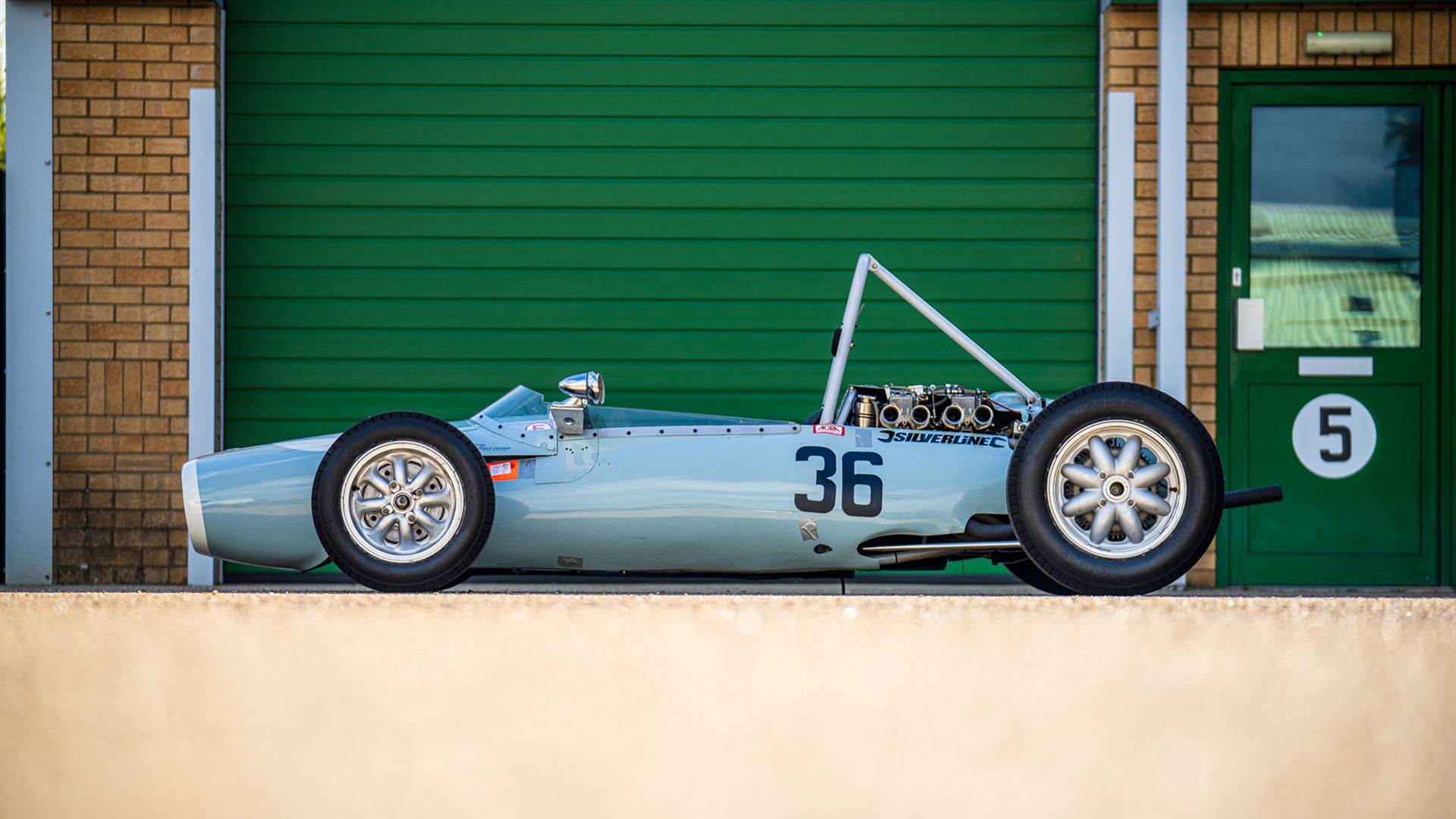
This rear-engined 1960 Kieft is one of only a handful of such cars built for Formula Junior racing. With chassis plate 1/1 and FIA papers valid until 2029, it’s for sale with Trade Classics at £26,950. Interested? Read on for what you need to know.
It took a young Stirling Moss to point out its shortcomings. However, a redesign soon paid dividends; Moss won the F3 support race at the 1951 Dutch Grand Prix in a Kieft and later became a director of the company, along with his manager Ken Gregory. Don Parker subsequently won two British F3 titles, in 1952 and 1953, behind the wheel of a Kieft.
A Formula Junior comeback for Kieft
Kieft sold up at the end of 1954, and for a while the name drifted. In spring 1960, however, racing driver Lionel Mayman and his brother-in-law John Turvey bought what remained of the business, with plans to put Kieft back on the grid.
Formula Junior was the brainchild of Italy’s Count Giovanni Lurani, who wanted an affordable first rung on the single-seater racing ladder. The first event was at Monza in April 1958, and the rules were adopted internationally that October. Engines had to be based on production touring car units, up to 1,100cc and with a minimum weight of 400kg. Gearboxes and brakes also had to be sourced from production cars.
It proved to be a superb breeding ground. Jim Clark, John Surtees, Denny Hulme and Jochen Rindt all rose through the Formula Junior ranks before the series was replaced in 1964.
An ‘ideal starting point’ for racing
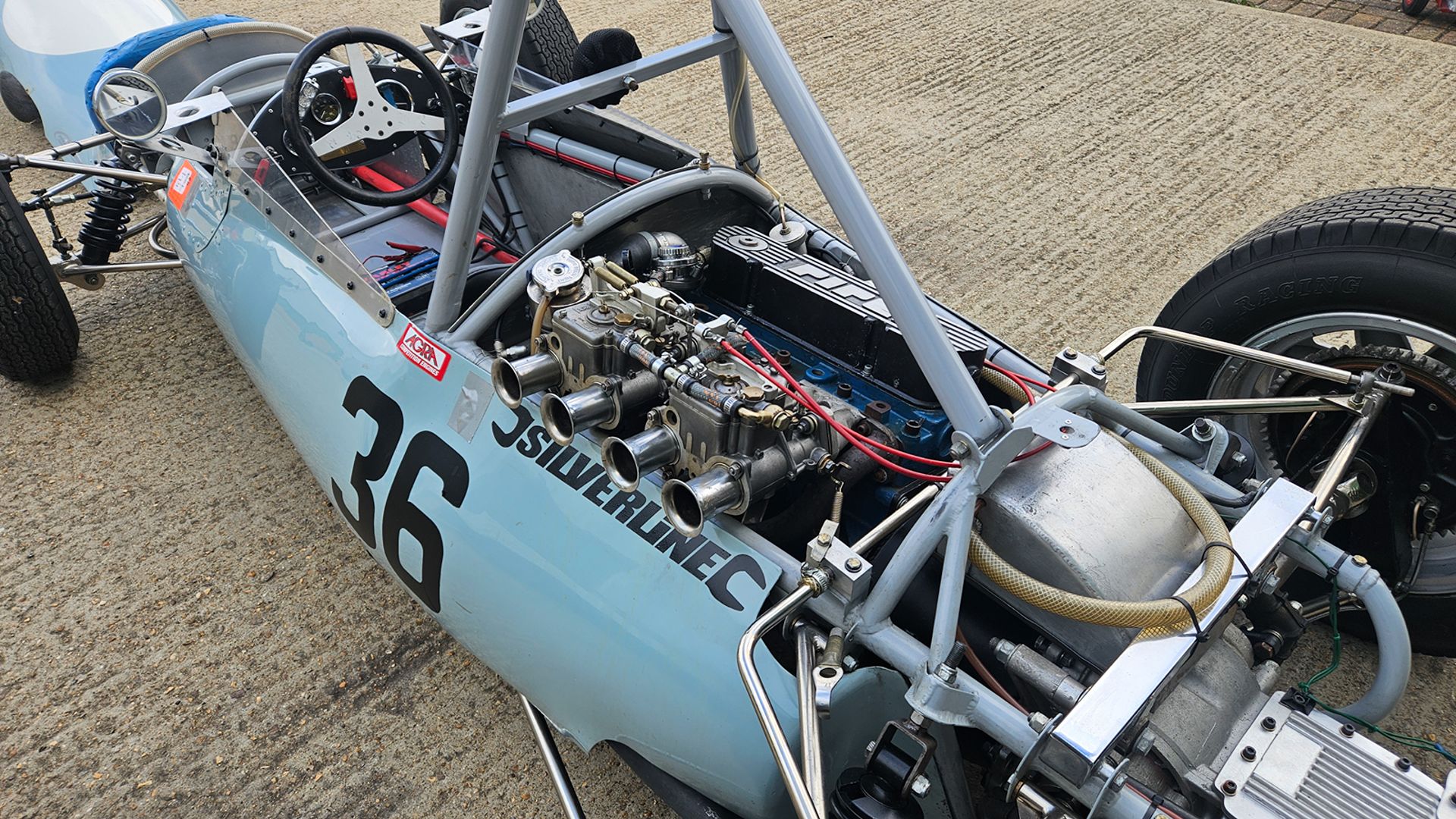
Mayman’s Kieft, designed by Ron Timmins, was a rear-engined spaceframe car with wishbones front and rear. Production cars used an Arden-tuned 1,098cc Ford 105E engine making around 82bhp, mated to a Renault Dauphine gearbox.
Peter Arundell demonstrated the car to the press at Silverstone in March 1961, where Motor Sport magazine praised it as an ideal starting point for novices who wanted to race seriously. A kit of parts cost £1,350.
Results followed, although not exactly in a flood. John Rhodes won at Mallory Park in July 1961, then David Prophet (later a Formula 1 driver), claimed a string of second places. Production was halted in 1962, with only around five cars completed.
What about this particular Kieft?
This car wears a brass Kieft Sports Car Co. Ltd. plate – stamped 1/1 – beneath its steering wheel. It is understood to have raced in the UK for around four years before being exported to America in 1964. It was involved in an accident there in 1968.
According to a forum post citing Des Hammil, the Kieft prototype was broken up to supply parts for the first five cars, and by 2005 two of the survivors were in the USA. This car, which was still in America until 2015, may well have been one of them.
It was brought back to Britain in 2015 and completely rebuilt in 2017. Since then, the current owner has campaigned it in historic racing with some success, and the listing headlines it as a class winner. Crucially, it holds an FIA Historic Technical Passport valid until 2029, which opens the door to properly sanctioned historic events.
It’s a pretty thing, too, with an aluminium body over the steel spaceframe, a removable glassfibre nose with the Kieft crest, and pale blue paint wearing race number 36.
A racing car that has been raced
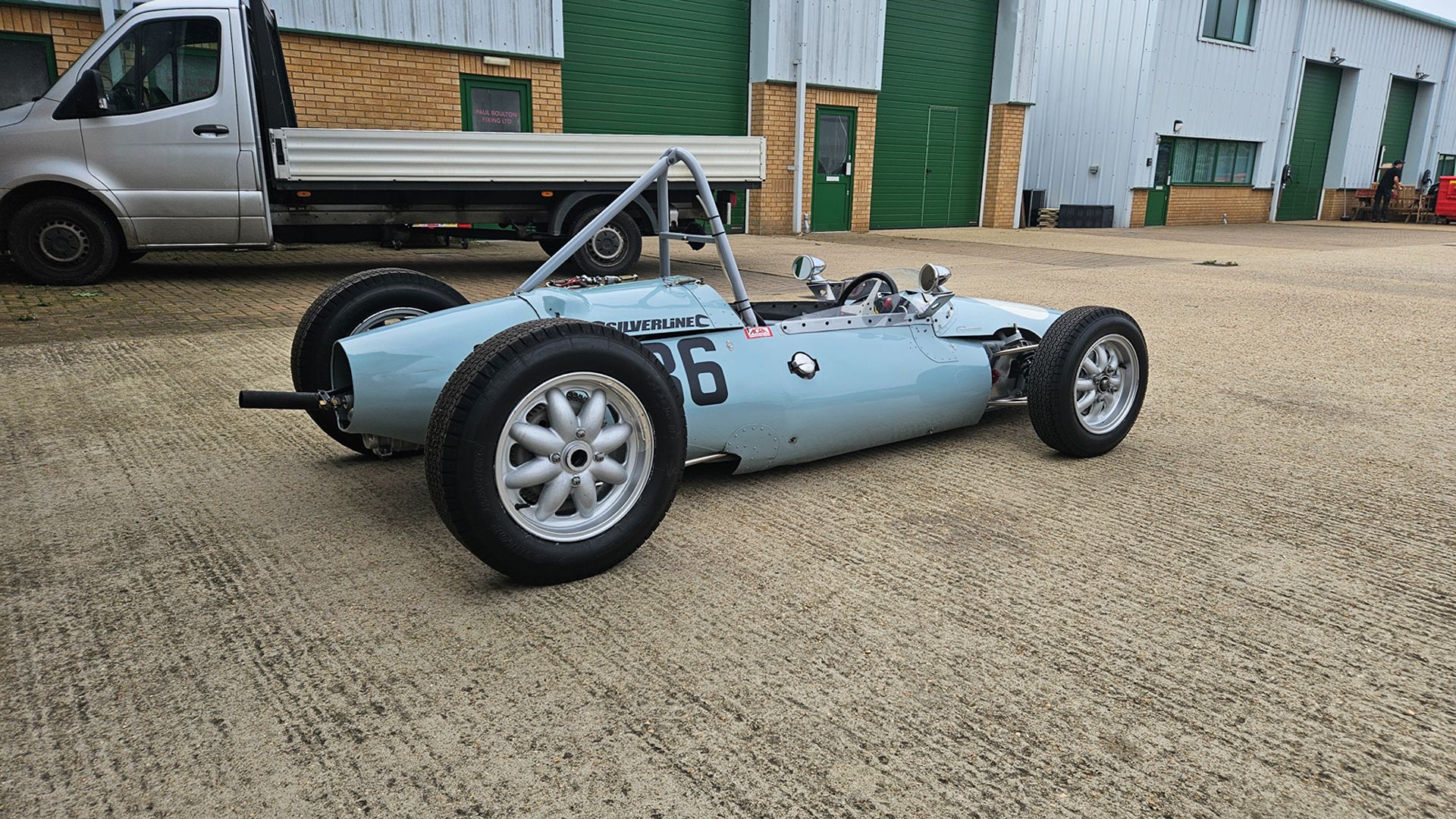
This is a racing car that has been raced, so its condition isn’t perfect. The nose cone has some cracking, while the glossy paint carries a few chips and scuffs. The period-pattern wheels also have some minor marks, but the Dunlop racing tyres are nearly new.
In the cockpit, the seat is in good, usable condition, while the steering wheel rim is worn – particularly at the top. Before it races again, it will need new harnesses and a service for the fire suppression system. Both are routine jobs, but worth budgeting for.
Importantly, the Kieft’s engine has only covered about 252 miles since its last rebuild, which equates to roughly three hours of use. Complete overhauls typically occur at 2,500-mile intervals, with a valve lap recommended around the 1,200-mile mark.
What is a Kieft Formula Junior worth?
Kiefts rarely come up for sale, which makes valuing one tricky. Our best guess uses Supercars.net’s 2021 Formula Junior price guide, which put a Kieft at $35,000 for a car needing work, up to $60,000 for the best examples. For context, the top-ranked Lotus 18 was priced at $85,000. Those are US figures, of course, and the guide warns that values elsewhere can differ by 25 percent or more.
At £26,950, this car sits near the bottom of that range, despite a recent rebuild, a successful race record and FIA papers valid until 2029. For anyone who wants to try historic single-seater racing, there can be few more interesting routes in for the money.
You’ll note we have headlined this story ‘Classic Car of the Week’, rather than the usual ‘Auction Car of the Week’. Unlike most cars in this slot, the Kieft won’t be going under the hammer; it’s a fixed-price classified sale.
The car is located in Kimbolton, Cambridgeshire, and the full listing, with exterior and interior photos, plus on-the-road videos, is on the Trade Classics website now.
ALSO READ:
Great Motoring Disasters: MG XPower SV