

FIVA (the Fédération Internationale des Véhicules Anciens) has asked legislators to respect historic cars when passing emissions laws.
The global classic car organisation, which is a non-governmental partner of UNESCO, is worried about a lack of consistency between different countries on low-emission zones.
This lack of clarity could result in classic cars being banned from certain cities, as countries attempt to tackle urban pollution and climate change.
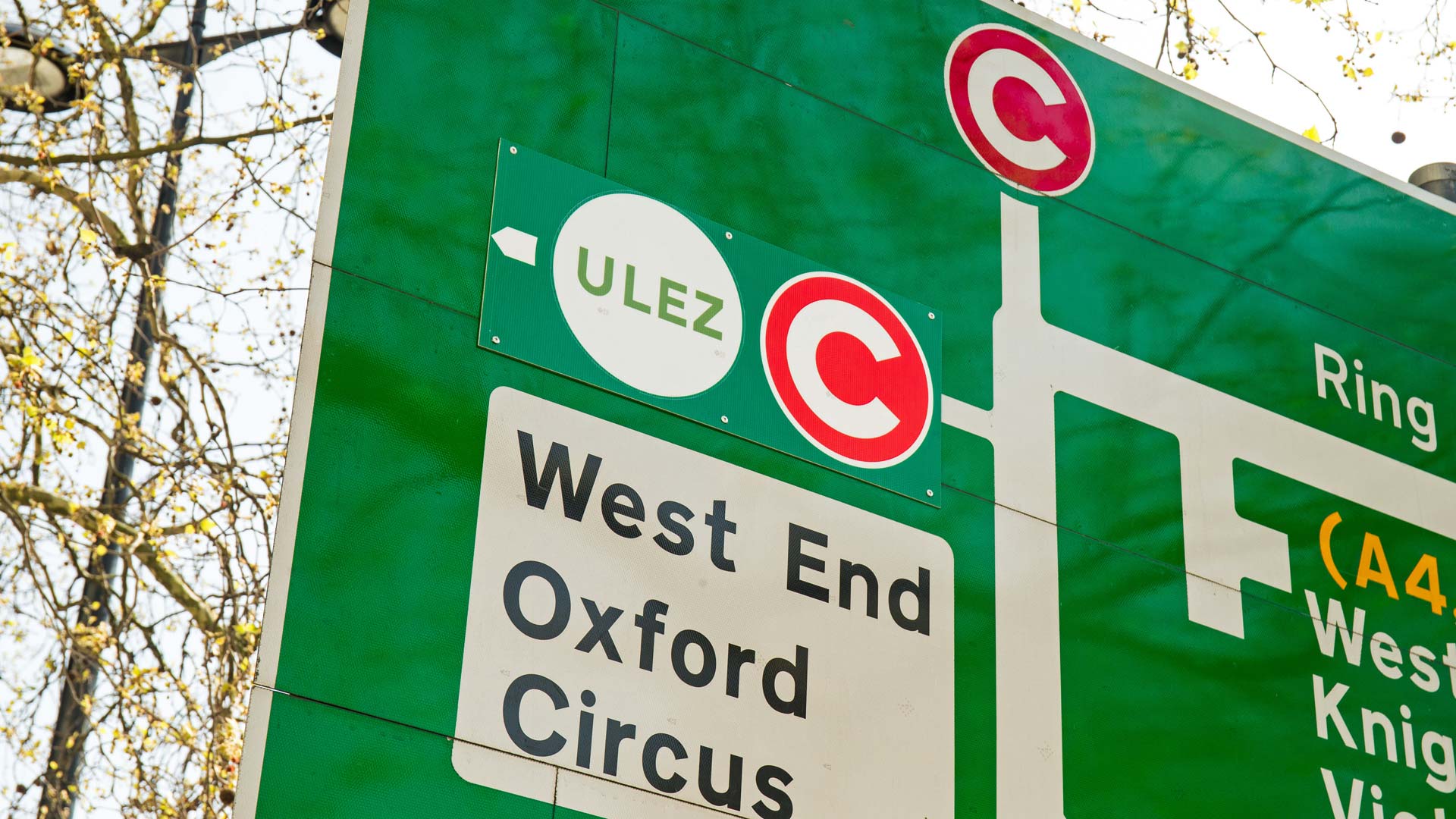
FIVA highlights the contents of the European Commission’s ‘Sustainable and Smart Mobility Strategy’, published at the end of 2020. An additional ‘Roadmap’ to support urban mobility is expected to see 100 climate-neutral cities across Europe by 2030.
The concern comes from a lack of consistency in the approach taken to historic cars in low-emission zones.
Some countries, such as Germany, Denmark, Austria, and Sweden all exempt classic cars from low-emission zone restrictions.
However, FIVA fears that without clear central guidance, other countries may tar historic vehicles with the same brush as older polluting cars.

To tackle this, FIVA has urged the European Commission to create an overarching policy to protect historic vehicles. This should make it clear that historic vehicles have ‘cultural merit’, and are ‘typically well maintained’ and ‘rarely used’.
FIVA itself defines a historic vehicle as ‘a mechanically propelled road vehicle at least 30 years old; preserved and maintained in a historically correct condition; not used as a means of daily transport; and therefore part of our technical and cultural heritage’.
In the United Kingdom, this definition is the one applied by the leading Federation of British Historic Vehicle Clubs. However, the UK government policy uses a 40-year timeframe to class cars as historic for tax and MOT exemption purposes.
A recent petition seeks to change UK rules to a 30-year definition. But this current disparity demonstrates the potential risks raised by FIVA.
ALSO READ:
Petition seeks to give younger cars classic tax status
Popular cars disappearing from our roads
Jenson Button’s Radford to build sports car inspired by Lotus Type 62


“This should make it clear that historic vehicles have ‘cultural merit’, and are ‘typically well maintained’”
Define cultural merit…? Great Grandads Riley he went for picnics in has more “cultural merit” than your Grandads Mk1 Tina him and his mates went to Camber Sands in?
“and ‘rarely used’.”
So no ordinary bod can run a classic as his daily, only the rich with mothballed semi-museum pieces get the bonus of no road taxes?
This is like the “rich get richer” tax dodges on electric cars, while Ordinary Joe subsidises them through taxes on diesel and petrol.