

The Toyota Prius is 27 years old in 2025. Now into its fifth generation, it has become the embodiment of the affordable hybrid car. Who hasn’t either driven or been a passenger in a Prius?
A trailblazer when it first appeared in December 1997, the Prius was the first mass-produced hybrid, and is now one of Toyota’s most famous models.
Endorsed by celebrities and minicab drivers the world over, how does the first version of this Japanese eco warrior stack up today?
What are its rivals?

The first-generation Prius hit UK streets in the autumn of 2000. Even though development of electric and part-electric vehicles had been ongoing for decades, at the turn of the millennium Toyota’s new arrival had very few competitors using the same fuel-saving technology.
The most notable was the Honda Insight. Also a hybrid, the Honda adopted a sleek coupe silhouette that referenced the 1980s CRX. This made it a two-seater, whereas the more practical Prius saloon could carry a full complement of five adults. At a pinch.
What engine does it use?
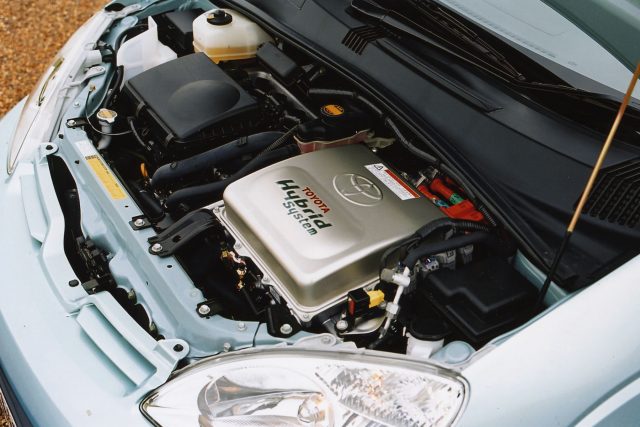
Under the little Toyota’s stubby nose is a 1,496cc petrol engine, which runs an Atkinson combustion cycle for maximum fuel efficiency. The VVT-i unit produces 70hp, and is supplemented by a 40hp electric motor.
Unlike its rival from Honda, though, the Prius can be powered by either the petrol engine, the electric motor or a combination of both. To aid its electric-ness, a bank of 6.5Ah nickel-metal hydride (Ni-MH) batteries sits behind the rear seats, along with a generator.
CO2 emissions from the tailpipe were measured at 120g/km – very low for a petrol car at the time.
What’s it like to drive?
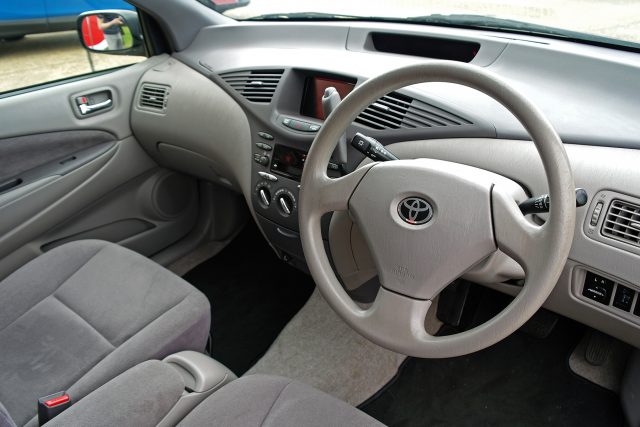
You’d be right in thinking the original Prius isn’t an exciting car to drive, but there are pockets of wonder to be enjoyed. There’s a familiarity in the way the car goes about its business. Its laid-back and relaxed demeanour is shared by its descendants.
The petrol engine and electric motor are monitored by a control system that measures the ratio of power coming from each source and operates the car in the most efficient way. That power is directed to the front wheels, with any excess energy used to recharge the battery pack.
Start off in purely electric mode and the original Prius feels very contemporary and quiet, but it doesn’t take long before the petrol engine makes its presence felt. Move up the rev range, and it gets quite vocal – don’t worry, it won’t rev past 4,500rpm – but you’ll more than likely be concentrating on the column-mounted gear selector wand to notice. Slot it into ‘B’ when going downhill and the little Prius recaptures energy – just like a modern hybrid.
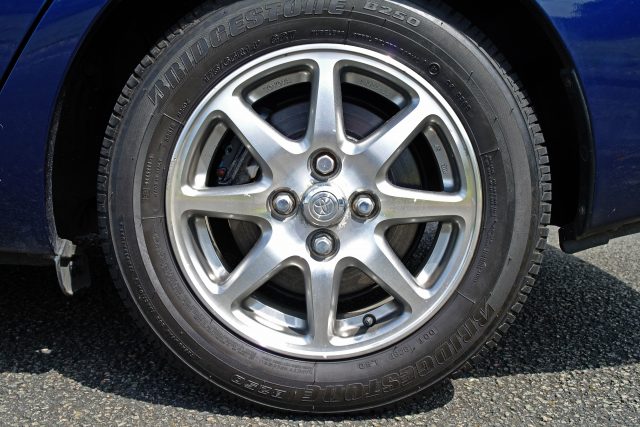
Elsewhere, there is light steering – vague in feel if we’re honest – but with keen turn-in from its low-rolling-resistance 15-inch tyres, the original Prius is fun and enjoyable to drive. So long as you remain aware of its eco limitations and purpose, at least. One of those limitations is speed – the first-generation Prius isn’t a fast car; that would be counter-productive to its environmentally-friendly ethos.
Reliability and running costs
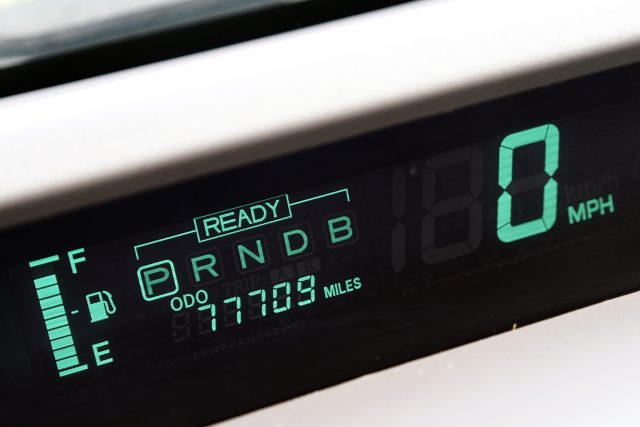
Toyota’s first-generation Prius appears to be a paragon of reliability, with many cars racking up 200,000 or even 300,000 miles – far more than Toyota GB’s example, which had around 77,000 miles on the clock when we tested it. Low ownership costs are another benefit, too.
In 2003, towards the end of its life, early cars were offered with a three-year or 60,000-mile warranty, while the hybrid components and battery were guaranteed for eight years or 100,000 miles.
For the really wary, an optional 11-year and unlimited mileage extended hybrid battery warranty was available.
Could I drive it every day?
There’s no reason why not. The original Prius shares its 2025 counterpart’s fuel-saving values, and is similar to to drive in spirit. So yes, you could quite easily pootle around in it on a daily basis.
The hard-wearing interior – unremitting in its greyness – shouldn’t be too taxing to keep in good condition, either. Rather more obviously, it’s the hybrid powertrain that will need most care.
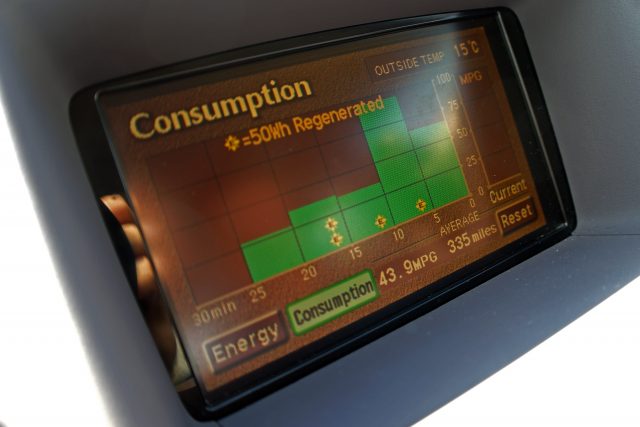
To ease the car’s passage into the digital age of convenience, there’s a smattering of modern-day equipment, too. Most cars came with ABS, alloy wheels, air conditioning, a CD/radio/cassette system, electric windows, metallic paint, twin airbags and a 5.8-inch LCD colour touchscreen as standard. Optional kit included satellite navigation and a six-disc CD autochanger.
How much should I pay?
Prices for an original Prius start from around £1,500. That’s very cheap compared to its equivalent today, but price isn’t the problem. Finding a car in good condition is.
Between 2000 and 2004, only 1,200 first-generation cars were imported. The list price when new was £16,495, around £5,000 more expensive than Honda’s similarly-sized Civic hatchback.
What should I look out for?
If you find a decent example of Toyota’s debut petrol-electric car, the main issue may be the hybrid system’s battery life. The lifespan of those Ni‑MH batteries was expected to be around 10 years or 100,000 miles. In terms of age, at least, every second-hand version will have reached that years ago. However, certain reports suggest that little battery degradation happens at all.
In 2011, the Mk1 Prius was recalled to check the nuts that secure the pinion shaft in the steering box assembly. Cars affected were registered between 25 January 2000 and 30 May 2003. Transmission failure has been known to occur, too, which manifests itself as an illuminated warning light on the dashboard.
Should I buy one?
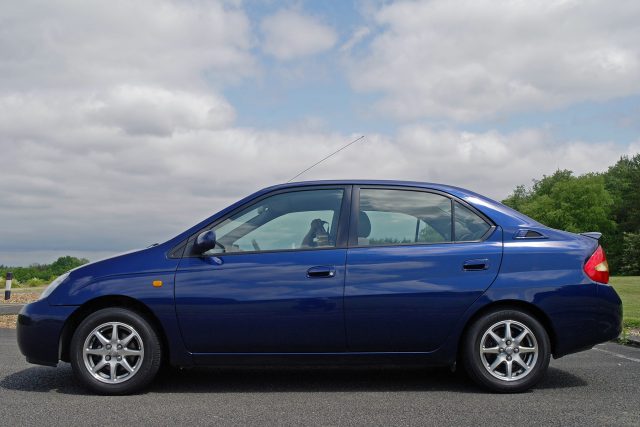
While many modern small-capacity turbocharged petrol engines now get close or exceed the original Prius’s fuel economy, the little hybrid is certainly worth a look – provided you can find one.
If you fancy a taste of hybrid motoring, and a quirky modern classic, this is a very affordable option. Just double-check the hybrid powertrain and battery pack before you buy.
Pub facts

The Prius first appeared on 27 October 1995 at the 31st Tokyo Motor Show. A concept car wearing one of Toyota’s most famous nameplates and featuring the Japanese company’s ‘Toyota Hybrid System’ (THS) technology was unveiled. Few could have predicted what a success the Prius would become.
It wasn’t just on the road that the car was a trailblazer, though. In 2002, the Prius became the world’s first hybrid rally car to complete in an FIA-run event: the Midnight Sun to Red Sea Rally.
Three years later, a second-generation car set a new world land-speed record for a hybrid vehicle, posting a speed of 130.794mph at the Bonneville Salt Flats.
ALSO READ:
Toyota MR2 Mk1 and Mk3 review: Retro Road Test