
The Mercedes-Benz Museum in Stuttgart is renowned for its extensive collection of historic cars.
Yet it also hosts a further 1,500 other exhibits, with 33 focussed on the special accessories that have made a mark on automotive culture.
Nothing is too humble for the Mercedes-Benz museum it seems, with even the classic Little Trees air freshener included.
No more crying over spilt milk
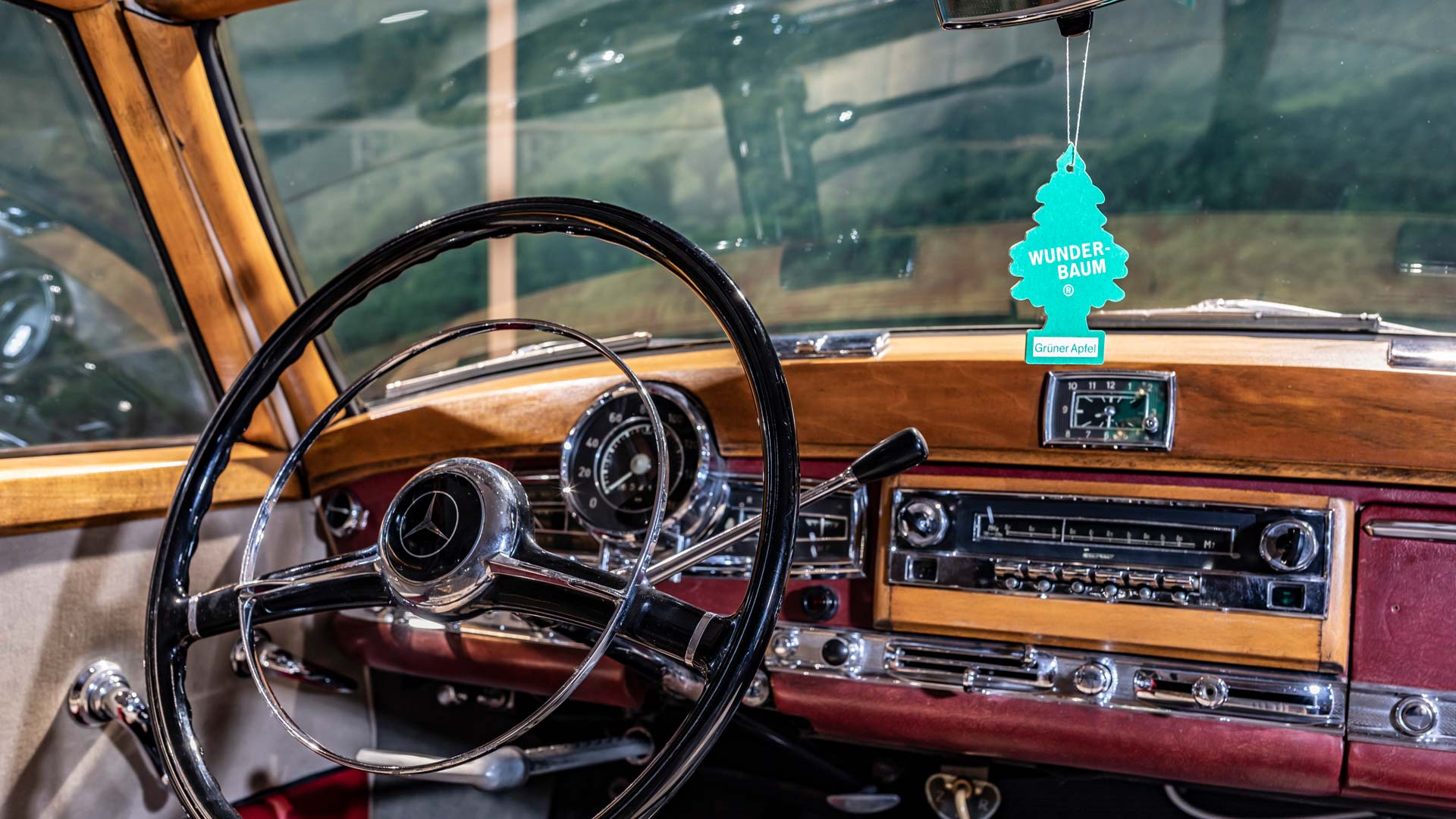
A car accessory staple to file alongside beaded seat covers and a ‘Baby On Board’ sticker, Little Trees are set to celebrate a 70th anniversary in 2022.
The idea was created by German-Canadian chemist Julius Sämann in 1952. A milk truck driver from upstate New York had complained to Sämann about the putrid smell left by spilt milk.
Sämann’s solution was to soak porous cardboard in pine needle oil, creating a way to release the clean scent over a long period of time.
The choice of the Little Trees design was an easy one for Sämann. He simply wanted to honour the Canadian pine forests that gave his product its distinct aroma.
Sweet smell of success
First produced in Watertown, New York, the iconic Little Trees are still manufactured there today. Others are made in a separate facility in DeWitt, Idaho.
From the original Royal Pine scent, the company now offers a total of 42 different varieties. These include Pina Colada, and even Pure Steel. However, it is the Green Apple flavour that Mercedes-Benz chooses to showcase in its museum.
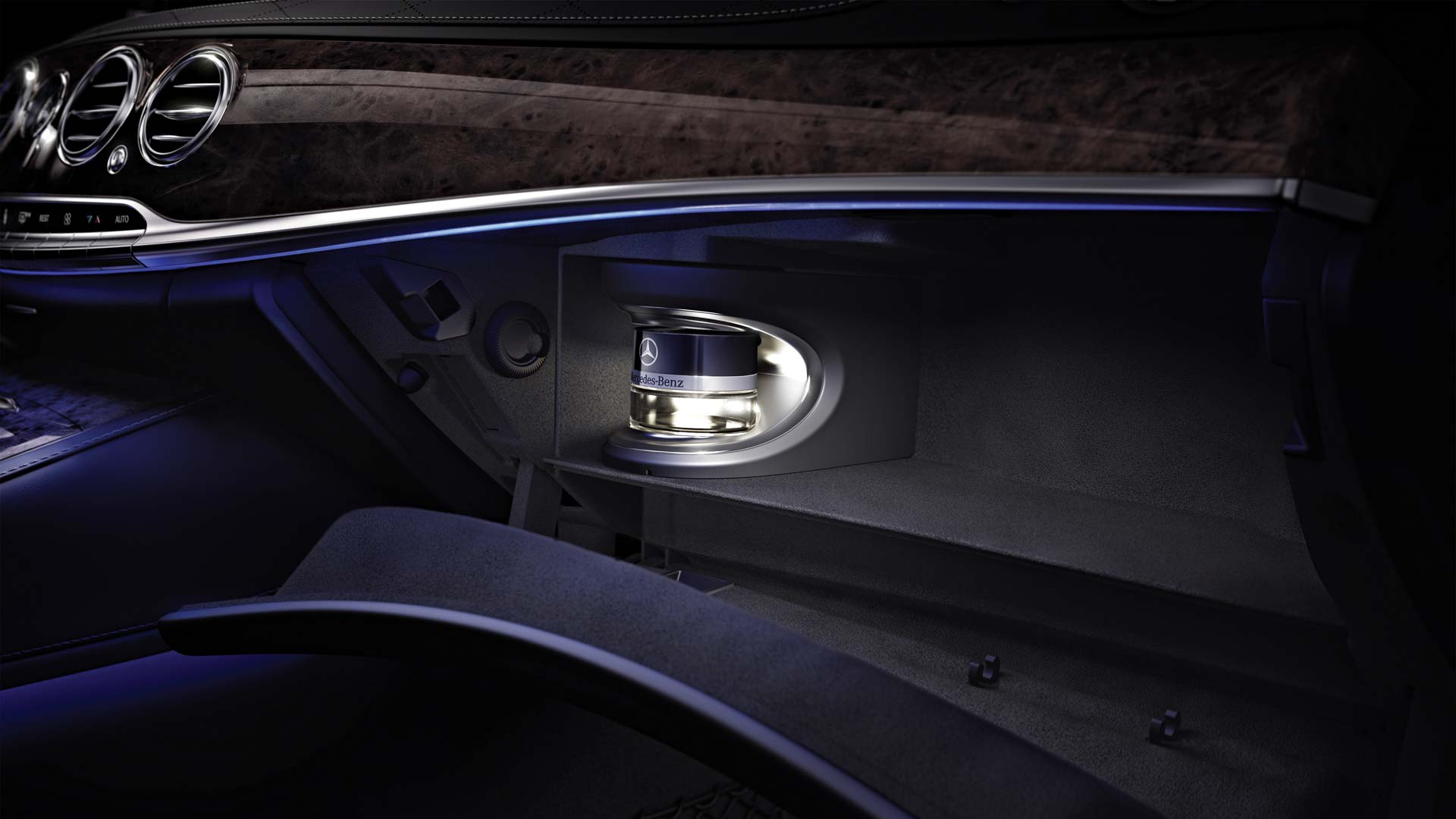
Little Trees do also form a link to more modern Mercedes-Benz developments. The Air-Balance system, fitted to a range of models, offers a selection of scents whilst ionising the interior air.
Clever, but perhaps not quite the same retro chic as a cardboard tree hanging from your interior mirror.
ALSO READ
Mercedes-Benz 190: celebrating a classic
The W140 Mercedes-Benz S-Class is officially a classic
The ‘go-anywhere car’: the history of the Mercedes-Benz G-Wagen