

Few cars capture the excess, ambition and sheer strangeness of the late 1970s and early 1980s quite like the Aston Martin Lagonda.
Launched at a time when Aston Martin was under serious financial pressure (sound familiar?), the William Towns-styled saloon looked like nothing else on the road. Low, long and sharply creased, it seemed less like a traditional grand tourer and more like a concept car that had escaped the motor show stand.
The 1982 Series 2 Lagonda featured here, which goes up for auction with Iconic Auctioneers later this month, is estimated to sell for between £80,000 and £100,000. It is a fine example of Aston Martin’s most eccentric car, showing just over 61,000 miles and fully restored over the past three years.
Aston Martin’s digital gamble
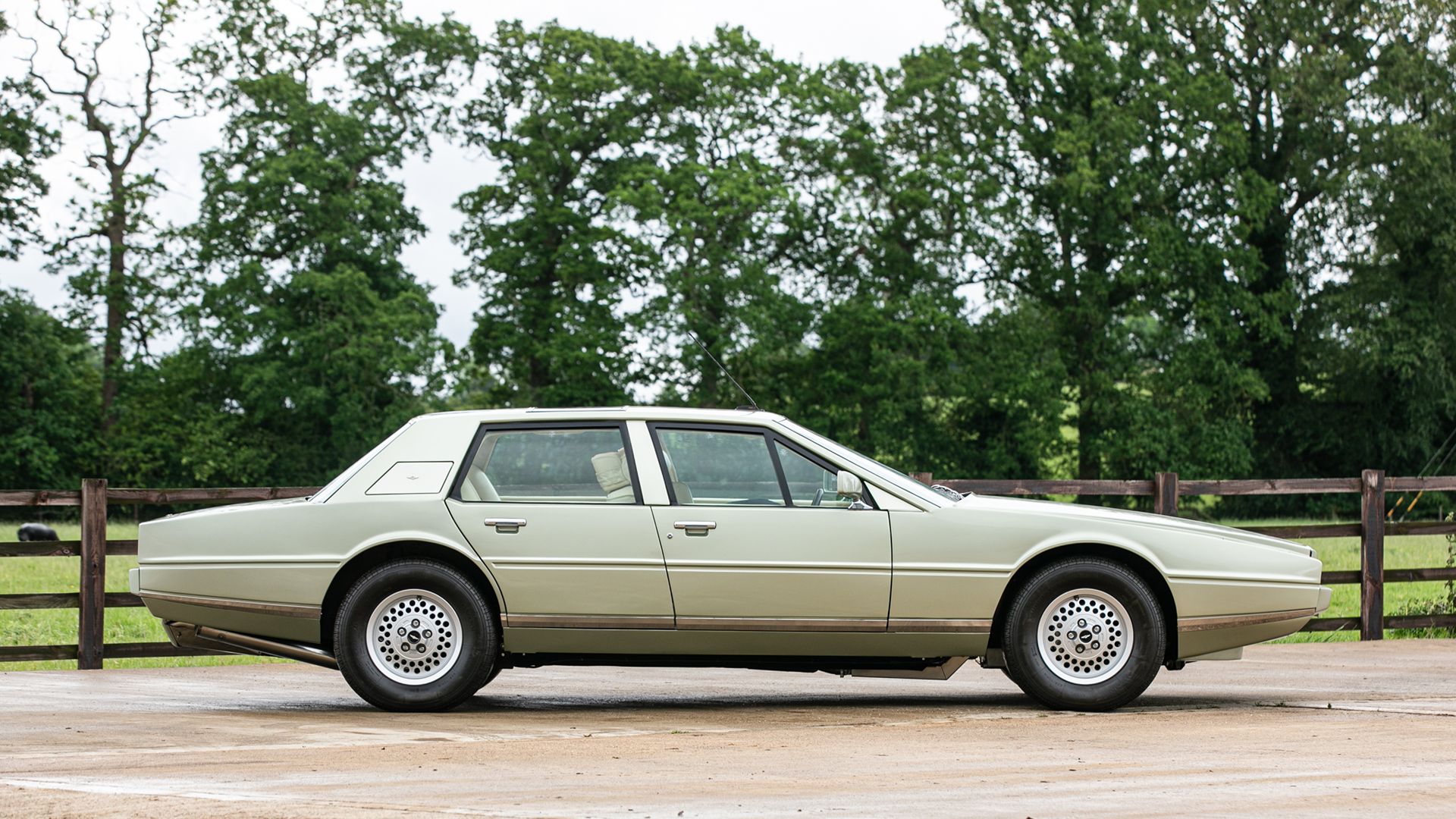
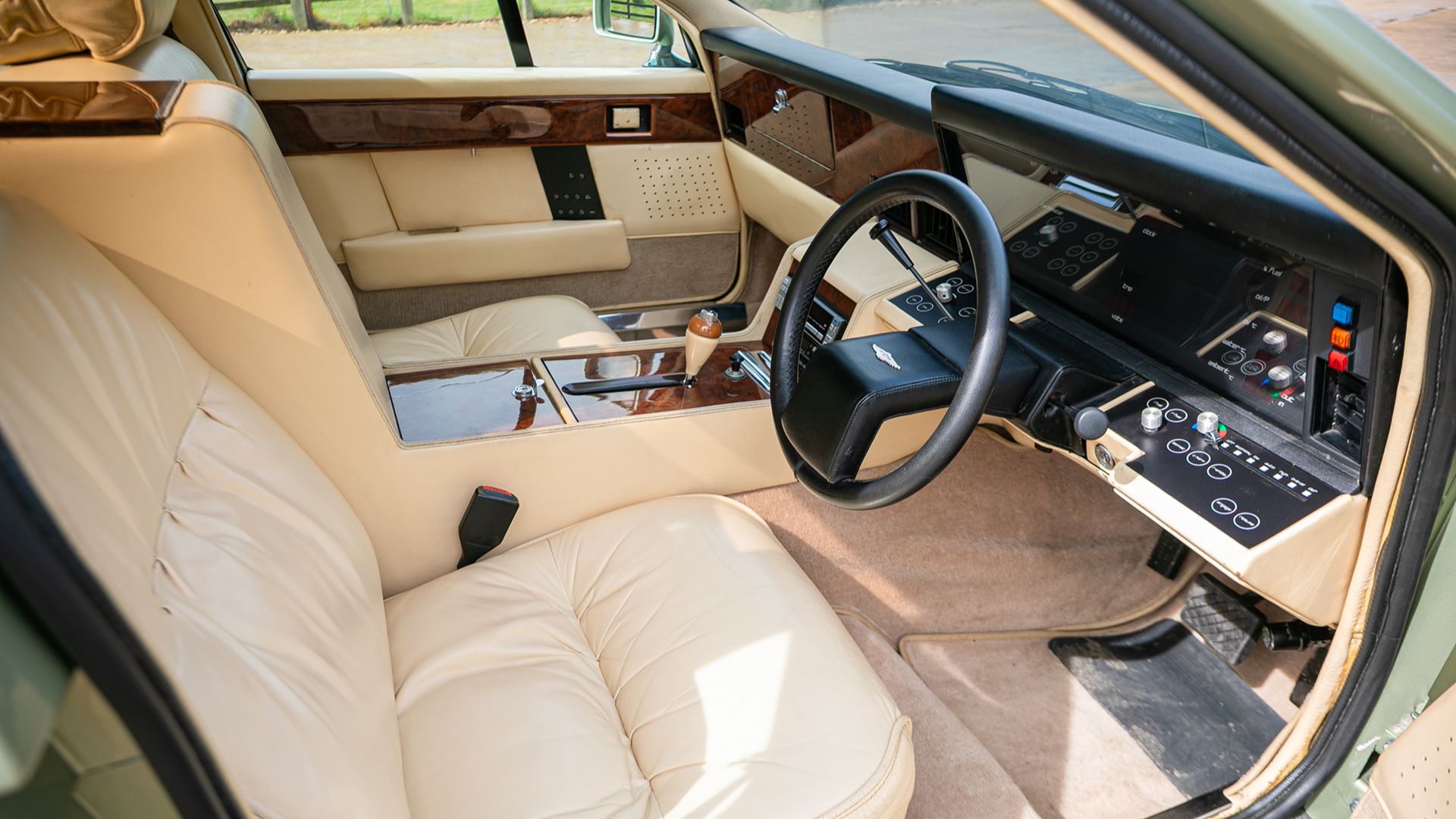
The Lagonda was aimed largely at the US and Middle Eastern markets, where demand for extravagant luxury cars remained strong. It was one of the most technically ambitious production cars of its day: the first with computer engine management, a digital instrument panel and, in later Series 2 models, cathode ray tube instrumentation.
Inside, the vibe was part gentleman’s club, part space capsule. Deep leather, lavish fittings and a dashboard from the future gave the Lagonda a unique character quite unlike any Rolls-Royce or Bentley of the day. Or indeed since.
Beneath that long bonnet lurked Aston Martin’s 5.3-litre V8 engine, fuelled by four distinctly dated twin-choke Weber carburettors. Its 280bhp was managed by a three-speed Chrysler TorqueFlite automatic transmission.
Despite being more than 17 feet long, six feet wide and weighing around two tonnes, the Lagonda could reach 60mph in 7.9 seconds and a top speed of 145mph.
The car offered by Iconic Auctioneers is chassis number L00R13028, the 19th off the production line. It was supplied new to a London fashion house, which retained it until 2002. During that period, the car covered around 59,000 miles and built up a detailed service record – including work by the Aston Martin factory.
Cathode rays and a cocktail cabinet
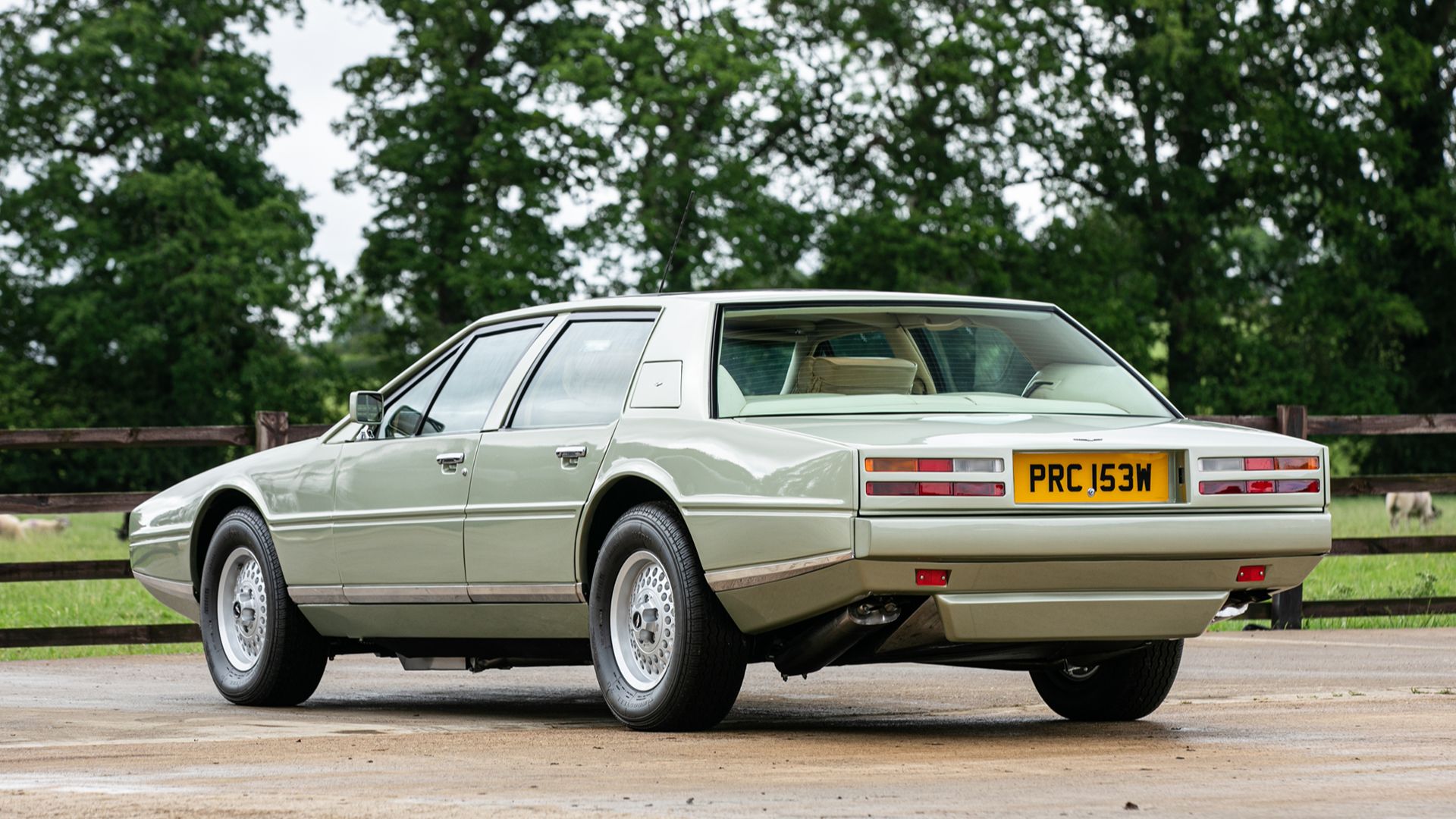
In October 1988, Aston Martin Lagonda stripped the car back to bare metal and repainted it in Kent Green. At the same time, the dashboard fascia and centre console were removed and remodelled to create a cocktail cabinet, plus a television and audio system.
After two further owners, the Lagonda joined the collection of businessman and motorsport personality Anthony Hamilton (father of Lewis) in January 2022. It has since been meticulously restored over a three-year period, including a major mechanical overhaul.
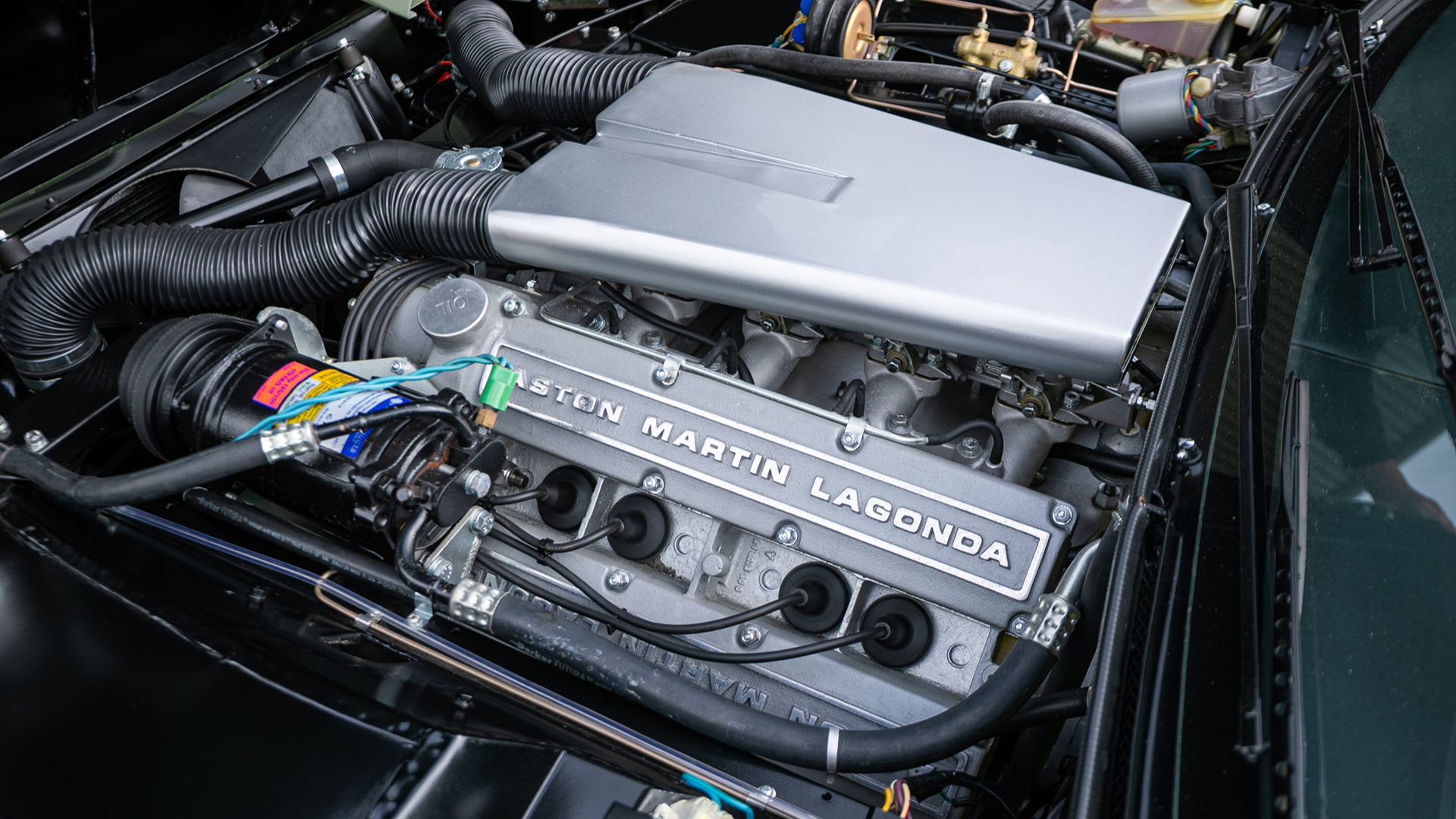
The all-alloy V8 was stripped, blueprinted and rebuilt to Aston Martin Works specification in 2023, before being dyno tested at 309hp – usefully more than the original figure.
The TorqueFlite 727 gearbox and converter were also rebuilt, as were the Powr-Lok rear differential and carburettors. The car also gained a new propshaft, Koni suspension, reconditioned power steering, modernised air conditioning, new fuel lines, a fuel pump, replacement radiators and fresh fluids throughout.
Crucially (and unusually?) for an Aston Martin Lagonda, the sci-fi digital dashboard is fully functional.
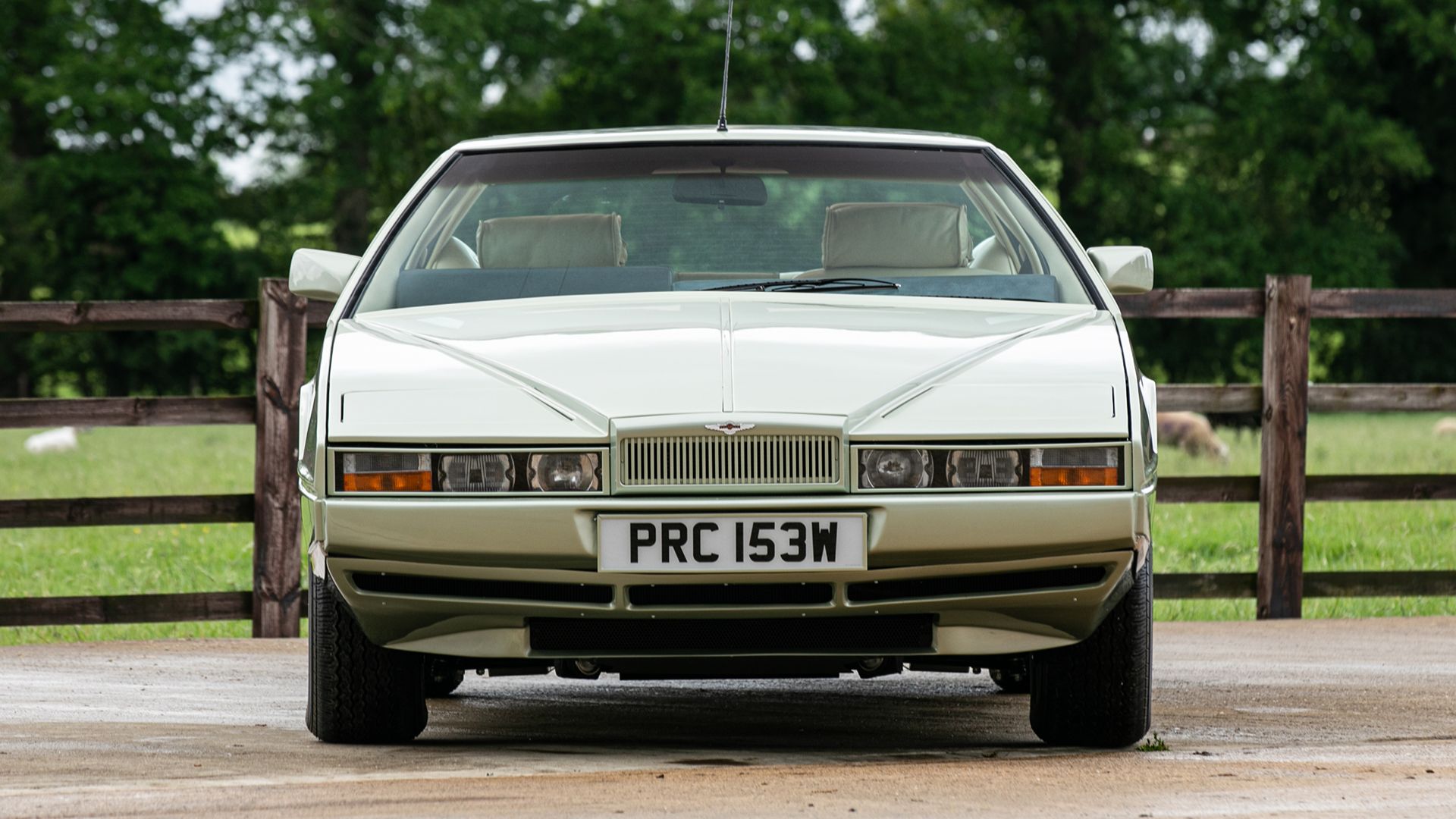
Just 645 Lagondas were hand-built in a 13-year production run that stretched from 1976 until 1989. As the years have passed, it has gradually moved from being an oddball curiosity to a recognised design classic.
The Lagonda remains wilfully unconventional, but that is precisely the appeal. Do you feel bold enough to start the bidding on Saturday 25 July at Silverstone?
ALSO READ:
Aston Martin DB12 S 2026 review
Exotic and quixotic: a history of Aston Martin and Zagato
The Ferrari interior inspired by Apple – and other cool car dashboards